
Cybersecurity and Financial Protection
Small Businesses are relying on information technology and digital tools more than ever.
Technology and resources are supporting maximized opportunities for Small Business in increasingly significant ways. However, the very tools that make Small Businesses competitive have also put them in the crosshairs of malicious cyber actors. What’s more, federal cybersecurity regulations are convoluted, forcing companies to spend time and money on compliance, with a disproportionate share of the burden falling on Small Businesses, which often do not have the same resources as their larger counterparts.
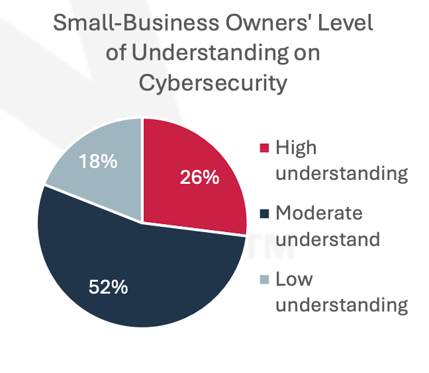
Lawmakers from both sides of the aisle have recognized that cyberattacks have only increased exponentially alongside complexity of the cybersecurity compliance landscape. An overwhelming majority of Small-Business owners have expressed concern that they will be the target of a cyberattack, with many indicating they have already been the victim of a cyber-attack. In many circumstances, these cyber-attacks result in stolen credit card and other sensitive personal identifying information.
In short, cybersecurity standards exist across the federal government, but their convoluted nature makes it difficult for small companies to adopt a framework that works for them.
NSBA urges Congress to pursue policies to establish streamlined guidelines and protocols that ensure protection and security of information while considering the costs of compliance on Small Businesses.
Working solutions
In crafting legislation to meet objectives supportive of Small Business alongside technological and digital expansions, NSBA recommends lawmakers:
- Provide clear and simple steps for companies to follow in the event of a data breach.
- Account for Small Business in all proposals that involve community stakeholders and public-private partnerships.
- Extend consumer banking protections to the banking accounts held by America’s smallest firms.
NSBA regularly conducts surveys among our members and Small-Business owners to produce insights that help inform our policy stances and influence important initiatives in Washington, D.C. and across the country