
Free Trade Agreements
Free Trade Agreements enable Small Businesses to access global markets and compete internationally.
America's position as a world leader centers around its competitive success in the global economy. For more than 50 years, the U.S. has been at the helm of breaking down barriers to trade and creating a more fair and free international trading system. Basing this system on market economics and the rule of law, the influence of the U.S. in this space generates real American jobs and helps the growth of small- and medium-sized enterprises (SMEs).
Even on an upswing, Small Businesses are at an intrinsic disadvantage by their size in the global economy. NSBA and its international trade arm, the Small Business Exporters Association (SBEA), remain focused on emphasizing the needs of Small Business within the scope of U.S. trade to Members of Congress and trade regulators.
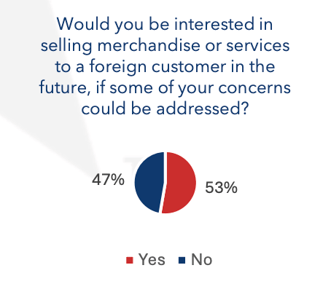
- According to NSBA’s 2022 Export Survey conducted with the U.S. Export-Import (EXIM) Bank, among SMEs, 40 percent said they have sold goods or services to a customer outside the U.S. Among those who haven’t, 53 percent said they would be interested in doing so.
- There are a broad number of benefits reaped by Small business under free trade agreements (FTAs), including access to new foreign markets and opportunities to expand existing export operations. Furthermore, a majority of SMEs state they are more likely to enter a new market if it is covered under an FTA with the U.S.
- FTAs have eliminated nontariff barriers that many Small Businesses cannot overcome because of the high fixed costs they impose on their bottom line; as more of these agreements are implemented, small businesses will find greater opportunities to serve markets that, previously, only large multinational corporations could access.
Free trade agreements are vital for Small Businesses, as they open new international markets, reduce trade barriers, and foster competitive growth opportunities.
Working solutions
 As our economy becomes more globalized by technology and necessity, common sense trade policies that focus on the needs of SMEs will increase the importance of FTAs. The U.S. currently enjoys 14 FTAs with 20 countries. These agreements have strengthened our economy and support millions of jobs, and they offer opportunities for success for American workers, businesses, and families.
- NSBA supports trade and investment agreements that are fair, accountable, and create a level playing field, putting American families and workers first, all while benefitting consumers and small businesses in a way that serves the greater economy.
- NSBA supports expansion of international trade and investment, fair and equitable market access for SME products abroad, and elimination of disincentives impeding the international competitiveness of small exporters.
- Recognizing the important role SMEs play in the U.S. economy and trade, NSBA supports the inclusion of stand-alone chapters dedicated to SMEs for all future FTAs—similar to the one in the USMCA.
NSBA has been surveying our members on trade issues for years – they consistently tell us they would export more if it were easier, something Free Trade Agreements do.