
Improve Workforce Training
A Small Business that makes good hiring decisions tends to have higher productivity and lower turnover, which positively affects the bottom line.
Hiring the wrong people can have a negative impact on employee morale and management time and can waste valuable training and development dollars.
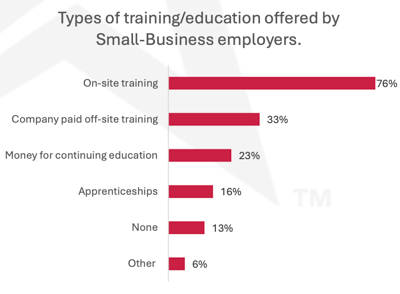
- Smaller employers place a premium on their employees: nearly all Small Businesses provide opportunities for on-the-job learning. The majority of Small-Business owners say employees stay with their business four or more years, with a reported 69 percent of employees staying at least three years with companies including a comprehensive approach to their onboarding, including skills training.
- According to NSBA’s Small Business Workforce and Labor Survey, when it comes to workforce preparedness, nearly 25 percent of Small-Business owners believe the quality of high-school educated workers has gotten worse in the last five years.
- Interestingly, a number of companies including a number of tech firms, are dropping requirements for traditional education degrees; however, hiring at Small Businesses with fewer than 50 employees has slowed for a considerable streak of time.
- An estimated 33 percent of Small Businesses pay for off-site training for employees, and approximately 25 percent provide money toward employees’ continuing education, underscoring the real-world cost of the skills gap many employers face.
Small Businesses’ hiring challenges around the country are changing, with a delicate balance of a need for skills and a need for an educated employee pool.
Working solutions
 When it comes to hiring and employment, when Small Businesses are able to act to ensure they have the skilled workers they need to run their businesses, their employee retention is shown to stabilize. Policymakers must ensure Small Business hiring is not hampered by unnecessary and unfair regulations that interfere with the regular hiring process, or other state-level requirements.