
Interstate Sales Tax
E-commerce provides businesses with access to much larger markets, but it also complicates even the simplest of retail transactions.
One of the most challenging aspects can be figuring out which sales taxes apply to individual sales, especially when selling to out-of-state customers.
- On June 21, 2018, the U.S. Supreme Court fundamentally changed the rules for collection of sales tax by Internet-based retailers. In South Dakota v. Wayfair Inc., the Court effectively stated that individual states can require online sellers to collect state sales tax on their sales. This rule overturns the Court’s 1992 decision in Quill Corporation v. North Dakota, which prohibited states from requiring a business to collect sales tax unless the business had a physical presence in the state.
- This decision has led to 43 states and the District of Columbia requiring remote sales tax collection.
- For many years, states argued that they were losing money by not being able to collect sales tax on Internet sales to customers located in their states. Formerly the burden was on the customer rather than the seller to pay the relevant tax, and customers often simply did not pay use tax to the state.
- For an online small retailer, the decision may mean they will need sales tax software to keep them up- to-date on which states and localities collect sales tax and at what rate –making compliance burdensome and complex.
- Compounding matters, the Tax Injunction Act (1938) prohibits most state tax cases from being heard in federal courts, meaning Small Businesses effectively have no recourse in a tax case from another state.
Online sellers need clarity and stability in the sales tax arena.
Working solutions
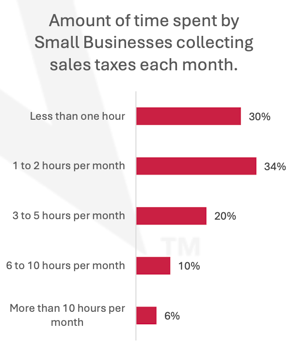 Since there are thousands of state and local tax jurisdictions across the country, NSBA urges Congress to advance legislation to protect Small Businesses and Internet entrepreneurs from excessive regulatory burdens associated with the Supreme Court's ruling.
- Any legislation should provide a small-seller exception and prohibit states from requiring remote sellers to collect sales and use taxes until the states come up with–and Congress ratifies–a compact simplifying sales-tax collection.
- States should be required to provide software to online sellers free of charge to calculate, collect and remit the sales tax.
- Liability protection should be given to states, sellers and sales tax software providers for errors made throughout the chain.
- The ability of federal courts to hear state