
Minimum Wage
Small Businesses, ravaged by a sluggish economy and lingering effects of the pandemic, are struggling to keep their doors open and keep employees on payroll.
More than doubling the federal minimum wage–which has been proposed–presents a significant obstacle to ailing Small Businesses trying to survive this pandemic. Lawmakers’ well-intended efforts to increase the federal minimum wage will cause a hardship for many small firms, particularly those in highly competitive industries, and could lead to reduced work hours, lay-offs and stalled Small-Business growth.
- Minimum wage increases often exert upward pressure on all employees’ pay, requiring an increase in prices.
- The Congressional Budget Office (CBO) estimated that raising the federal minimum wage to $17 by 2029—up from its current $7.25—would increase the pay of at least 18 million people, but also put 700,000 Americans out of work.
- Most Small Businesses paying minimum wage are typically in highly competitive industries with low profit margins, and an increase for any employees could be financially devastating to their bottom line.
- To offset higher employee wages, Small Businesses may need to raise their prices on the goods and services they sell. This can lead to decreased sales, decreased revenues, and lower profits. With less money to spend, Small-Business owners may have to decrease or eliminate capital improvements, marketing, new hires, bonuses, debt service, and production.
- According to the Bureau of Labor Statistics (BLS) 2023 data, only 1.1 percent of hourly paid workers in the U.S. are paid the federal minimum wage or below. Additionally, BLS data shows young workers are typically not supporting families; however, some 80 million workers aged 16 and older are paid at hourly rates, representing approximately 56 percent of all wage and salary workers in the U.S.
Some states and cities have already legislated minimum wage hikes to $15 per hour, and Congress is debating enacting a federally mandated minimum wage hike, which will affect all states.
Working solutions
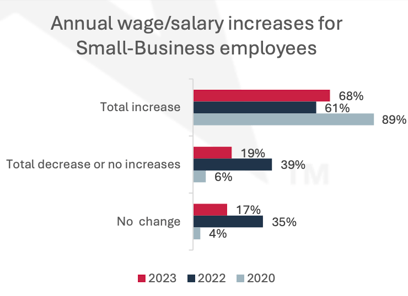
Regardless, minimum wage increases and mandates affect Small Businesses when it comes to labor costs, and that affects hiring levels and hiring rates.
- Lawmakers should oppose the legislation that would: increase the federal minimum wage to $15 per hour over five years; allow for annual automatic increases without the consent of Congress; or eventually eliminate the tipped wage.
- Policymakers must take caution in promulgating any kind of federal mandate on Small Businesses– particularly now under the weight of the pandemic and massive economic downturn.