
OSHA Regulations
With the Occupational Safety and Health Act of 1970, Congress created the Occupational Safety and Health Administration (OSHA) to ensure safe and healthful working conditions for workers.
Due to a complex set of regulations, many Small-Business owners simply do not know of or do not understand the OSHA regulations that apply to their business, which can result in huge costs. Small Businesses can face a penalty of up to $70,000 per violation.
- Businesses with more than 10 employees need to keep records of any work-related injuries and illnesses. Record keeping also applies for certain equipment, such as air pressure tanks or elevators, which must have their operating permits and records kept up to date.
- Employers must provide the right PPE (personal protective equipment) for their employees and can’t require workers to provide their own. Businesses are also responsible for other safe work conditions, such as proper ventilation.
- The requirements for Small Businesses differ depending on the state of operation, since OSHA allows states to create their own health and safety plans. There are currently 22 states that operate their own OSHA approved programs.
- Due to the tremendous regulatory requirements facing Small Businesses, many have had to hire “Compliance Officers” to help keep their companies compliant with federal, state, and local regulations.
- In 2021, OSHA took a more active role in the pandemic, issuing emergency rules requiring employers with 100 or more employees to require employees are either vaccinated or submit to regular COVID-19 tests. Employers also were required to provide up to four hours of paid time and reasonable paid sick leave needed to support vaccination.
Small Businesses face tremendous amounts of federal, state and local regulations, and staying up-to-date often costs them thousands of dollars each year.
Working solutions
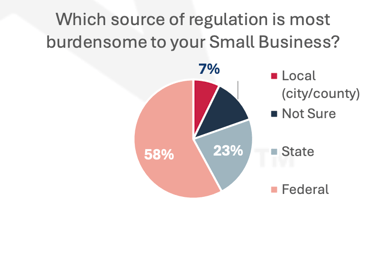 Even then, they can still be subject to large fines if they are in violation of OSHA regulations, even if they did so unknowingly.
- Lawmakers and regulators should make every attempt to streamline regulations and make plain language a priority for OSHA rules.
- Compliance assistance should be the focus of OSHA when it comes to Small Business— not violation enforcement.
- Small Businesses ought to be provided some kind of good-faith exemption for first time violations that do not result in injury where the violation was inadvertent.