
Tax Gap
Reducing the so-called tax gap has long been proposed as one way of increasing federal revenues without increasing tax rates.
Unfortunately, many of the proposals for dramatically reducing the “tax gap” involve significant new burdens and penalties on the millions of Small Businesses that are fully and honestly paying their tax obligations.
- The tax gap is the difference between taxes paid and taxes owed by law. The Department of the Treasury estimates a "gross tax gap" of nearly $700 billion.
- The Inflation Reduction Act included $80 billion in increased funding for the Internal Revenue Service (IRS), much of which is intended for increased enforcement and audits.
- In a perfect world with a straightforward, easy-to-understand tax code, increased enforcement wouldn’t be an issue, however we live in a world where inadvertent mistakes could lead to thousands of dollars in fines and accountant fees—all due to an overly complex code and woefully inadequate compliance assistance from IRS.
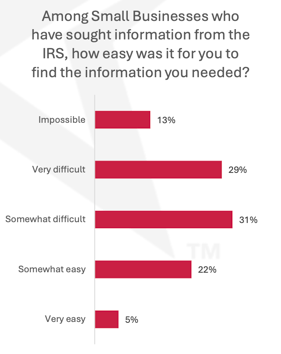
95 percent of Small Businesses who have sought information from the IRS have said it was difficult to impossible. NSBA fully supports efforts to collect legally owed tax revenues, but not on the backs hard-working entrepreneurs.
Working solutions
 The IRS should focus their efforts and research to better identify noncompliant taxpayers, enhance taxpayer services to inform taxpayers of correct tax obligations and adjust its enforcement tools to target those who intentionally evade paying taxes. Adding new burdens and requirements on Small Businesses already struggling to do the right thing is simply the wrong answer.
- Addressing the tax gap must entail balancing the desire to collect taxes that are duly owed with the importance of minimizing intrusive and complicated reporting requirements and additional audits of Small Businesses. Those who make a good faith effort should be assisted through education and tax simplification efforts.
- Any IRS proposals that focus new resources only on enforcement should be rejected. NSBA supports proposals that are fair and reasonable to address the issues of the tax gap and to increase tax compliance. Tax simplification and education is the most effective and equitable way to improve compliance and to reduce the tax gap.