
Tax Reform
The Tax Cuts and Jobs Act (TCJA) which was enacted late-2017 is now in effect, but key portions of it are only temporary - specifically those that help the majority of America’s Small Businesses.
The TCJA lowered rates on individuals and businesses and updated the business tax code to jumpstart America’s global competitiveness. However, it failed to include tax simplification, parity between large and Small Businesses, permanency of the changes, or deficit reduction. Unfortunately, in 2025, most individual—which includes any passthrough--cuts and some business tax cuts will revert to pre-reform levels.
- The law also made some negative changes to tax law, such as the move to require 5-year amortization of all R&D expenses—a change that is now fully in effect.
- Other phase-outs have already begun as well, most notably on bonus depreciation.
- As we enter 2025, uncertainty around future tax policy will have an increasingly negative impact on business planning. This effect is particularly pronounced regarding the estate tax, where long-term planning is crucial.
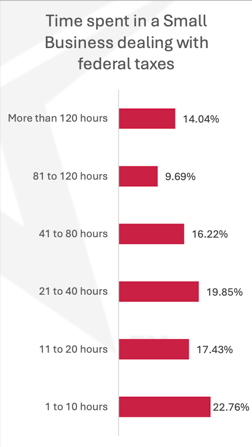
The majority of Small Businesses spend 20 hours or more each year dealing with federal taxes. Tax reform is critically important in the effort to help grow the economy and improve the fiscal situation.
Working solutions
 It is imperative that the U.S. moves towards a simpler, fairer tax system that does not attempt to only tweak one piece of the puzzle but instead is a permanent solution. Specifically, Congress should focus on fixing the national debt, simplifying the tax code for Small Businesses, creating stability and predictability in our tax laws, and moving toward greater parity in the tax treatment of various business forms.
- Rate Parity: Because the vast majority of small firms are passthrough entities, and therefore pay taxes on Small-Business income at the individual level, Congress must seek ways to more fairly reduce business taxes—including those on Small Business.
- Simplicity: The TCJA does very little to simplify the tax code, and actually makes it more complex for most Small Businesses. Truly simplifying the tax code means reducing compliance and administrative costs and making it possible for job creators to reinvest more of their own money in their businesses.
- Predictability: The TCJA sunsets the passthrough deduction after 2025, resulting in significant tax hikes on passthrough businesses. NSBA supports making the passthrough business deduction permanent.
- National Debt: Without spending-based reforms, deficits will continue to grow, requiring still higher taxes in the future. Outlays continue to far exceed revenues and will continue to do so until Congress places meaningful constraints on federal spending.